2026-08-27 ·
Septic Tank Pumping Schedule for Macon County Homes: 2026 Guide
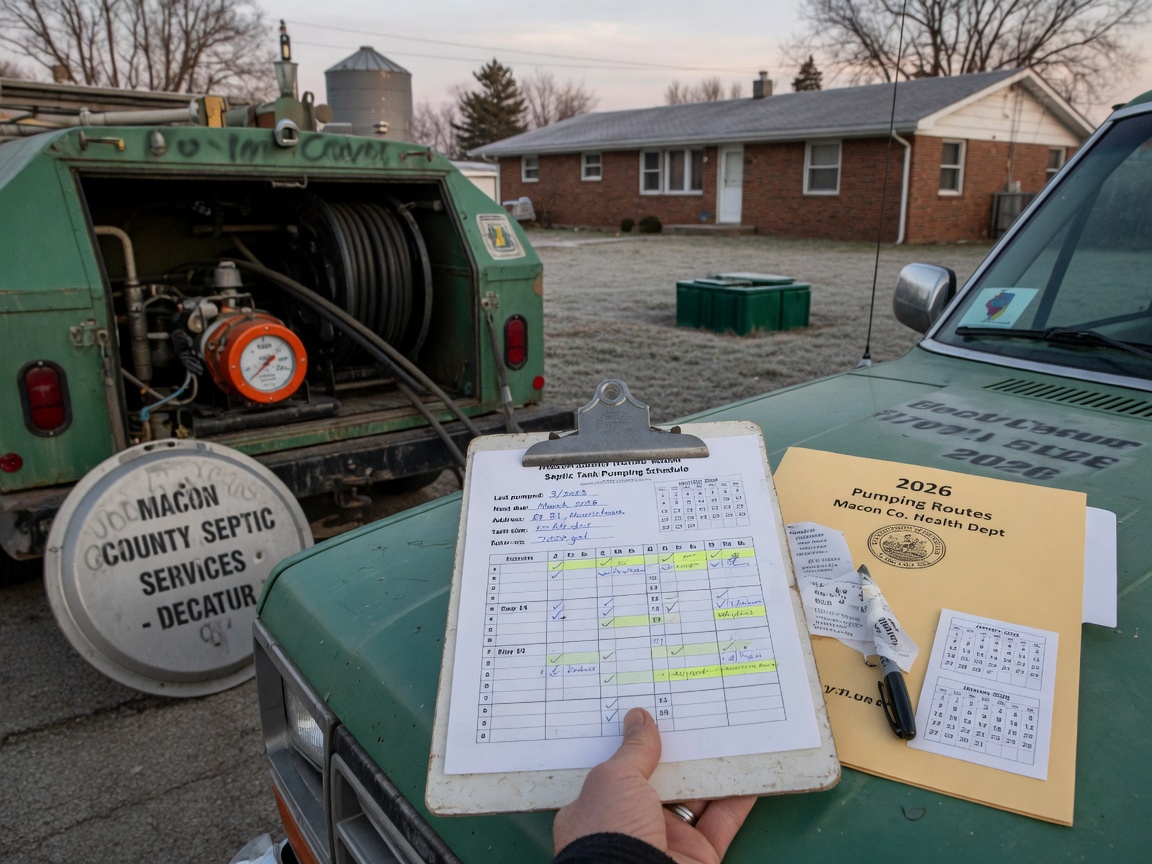
Macon County homes with septic systems generally require pumping every 3 to 5 years to prevent solids buildup and protect the leach field. This interval shifts based on tank capacity, number of residents, and daily water use, especially in neighborhoods with older infrastructure such as Millikin Heights or the Near Westside. Cold winters in the humid continental climate can slow bacterial activity in the tank, while hot summers increase water consumption from irrigation and cooling systems. Homes near Lake Decatur often see higher groundwater levels that influence how quickly waste settles. Regular inspections help catch issues before backups reach the drain field.
Factors That Change Pumping Frequency in Decatur Homes
Household size directly affects how fast solids accumulate in the tank. A family of four in Downtown Decatur may need service closer to the 3-year mark, while a couple in Forsyth often stretches toward 5 years. Tank size plays a role too—many pre-1970 homes in East End have 1,000-gallon tanks that fill faster than newer 1,500-gallon units. Soil type around Mount Zion tends to be heavier clay, which slows drainage and shortens the safe interval between pumpings. Water softener use or frequent laundry adds extra volume that pushes the schedule earlier. Checking sludge depth with a core sampler during annual visits gives the clearest local data rather than relying on averages.
Seasonal Weather Impacts on Septic Performance
Decatur's cold winters can reduce microbial breakdown inside the tank, leaving more solids that require earlier removal. Frozen ground in Lakeshore neighborhoods sometimes limits access for pump trucks until spring thaw. Heavy summer rains raise the water table near South Shores, which can back up effluent if the tank is already near capacity. Lake Decatur Area Homes: Preventing Sewer Backups During Heavy Rain outlines how storm events interact with septic systems in that zone. Scheduling pumpings in late fall before freeze-up or early spring after thaw helps avoid weather delays common in Macon County.
Practical Steps to Track Your Pumping Schedule
Keep a written log noting the date, sludge depth, and any odors or slow drains observed. Measure scum and sludge layers every 12 to 18 months using a long stick or hire a Sewer Camera Inspection to view conditions without digging. Note any changes after holidays when visitor numbers spike water use in Millikin Heights homes. Adjust the 3-to-5-year baseline if you add bedrooms or install a garbage disposal. Homes in the East End with mature trees may also see root intrusion that accelerates the need for service. These records help predict the next pumping without guesswork.
When to Schedule Service Outside the Standard Range
If drains gurgle or toilets flush slowly, arrange pumping sooner than the calendar suggests. Standing water over the leach field or strong odors near the tank lid signal solids have reached the outlet. Properties in Rock Springs with sandy soils may extend intervals slightly, while clay-heavy lots near the Civic Center area often need the shorter end of the range. Linking a camera inspection with pumping lets technicians spot cracks or blockages at the same visit. Consistent records from the past decade provide the best guide for each specific Macon County address.