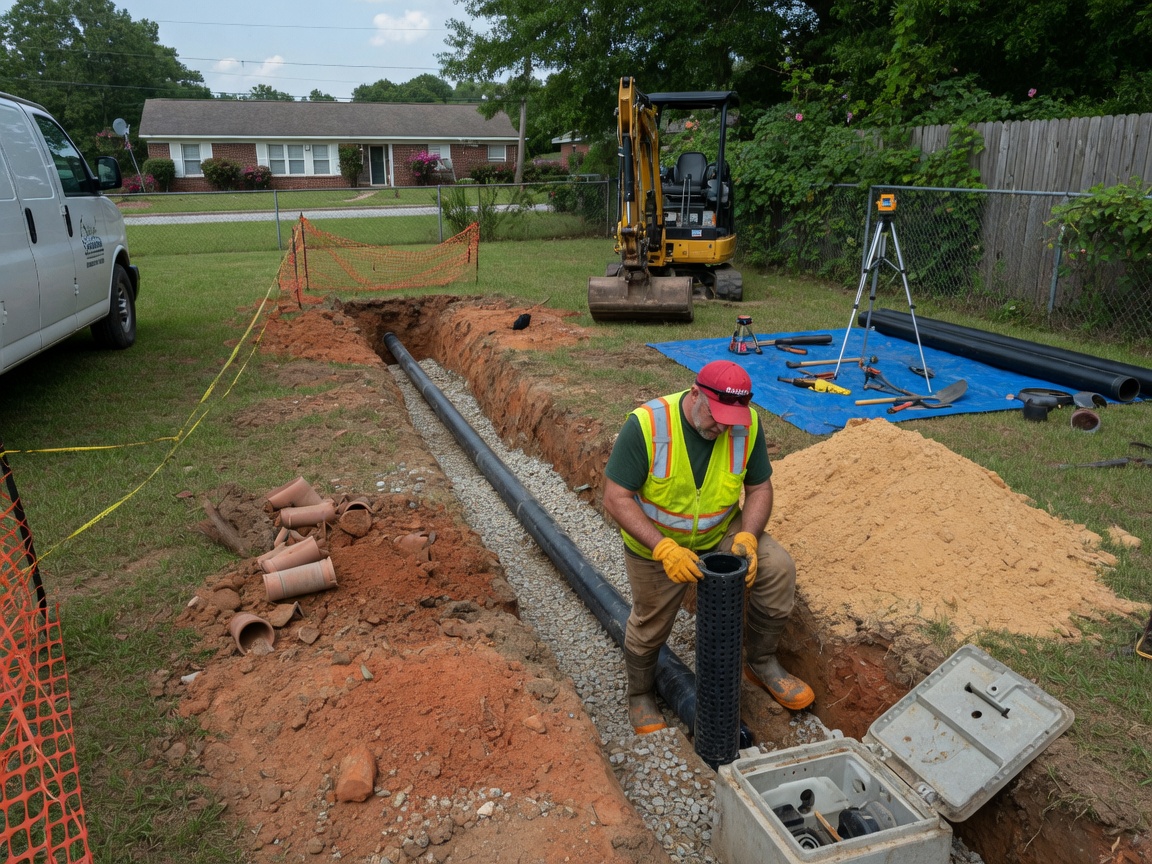
West End Decatur homes often sit on older sewer lines that run under narrow lots and mature trees along streets like West Main and Oakland Avenue. Kelley's Septic Tank & Sewer Service reaches these properties from its base at 1955 St Louis Bridge Rd to clear slow drains and perform septic tank pumping before winter freezes set in. Cold snaps followed by spring thaws push roots deeper into joints, creating the recurring clogs that show up on this side of town.
Narrow driveways and fenced backyards in the West End limit equipment access, so the crew uses compact jetters and portable pumps sized for the tight spaces common near Garfield Park and local schools. Drain cleaning here focuses on the clay and cast-iron sections that still serve many 1950s-1970s houses rather than the newer PVC found farther east. Septic tank pumping routes stay short because most West End systems tie into the Macon County lines that run toward Forsyth.
Summer humidity and heavy rains can overload laterals that empty into Lake Decatur's watershed, sending grease and paper backups into basements along Pershing Road. Regular drain cleaning prevents these events while septic tank pumping keeps solids from migrating into the drain field during the wettest months.
Around West End
We regularly work near:
- 📍St. Louis Bridge Rd
- 📍West Main Street
- 📍Oakland Avenue
- 📍Garfield Park
- 📍Dennis Lab School
- 📍Pershing Road
Drain Cleaning in West End — Local Notes
- •West End lots often have mature maples whose roots follow the old clay laterals that run close to the surface, requiring annual hydro-jetting rather than simple snaking.
- •Narrow alleys behind homes near St. Louis Bridge Rd limit truck placement, so the team stages equipment on the street and runs longer hoses to reach tanks in rear yards.
- •Cold winters freeze shallow lines under uninsulated crawl spaces common in 1960s West End housing, so drain cleaning jobs frequently include thawing and camera inspection to locate the ice plug.
- •Many West End properties still use 1950s-70s septic tanks that were never converted when Macon County extended sewers, so pumping intervals stay shorter than in newer Forsyth subdivisions.